
The History of Epoxy: From Industrial Innovation to Modern Art

Epoxy resin is everywhere today, but it wasn’t always the versatile medium we know and love. Its story begins in the 1930s, when chemists discovered the unique properties of the chemical reaction between epichlorohydrin and bisphenol-A. Initially, it was used almost exclusively in industrial applications—coatings, adhesives, and protective layers for machinery and aircraft. It was strong, durable, and resistant to chemicals, but it was far from safe or user-friendly. Early formulations were toxic, emitted strong fumes, and required strict handling precautions.
By the 1950s, epoxy began finding its way into marine applications. The boat-building industry quickly saw its potential for creating rot-resistant, waterproof bonds. Marine epoxies revolutionized construction and repairs, allowing builders to cast and seal wood in ways that were previously impossible. This era marked the start of epoxy’s long journey from industrial workhorse to creative tool.
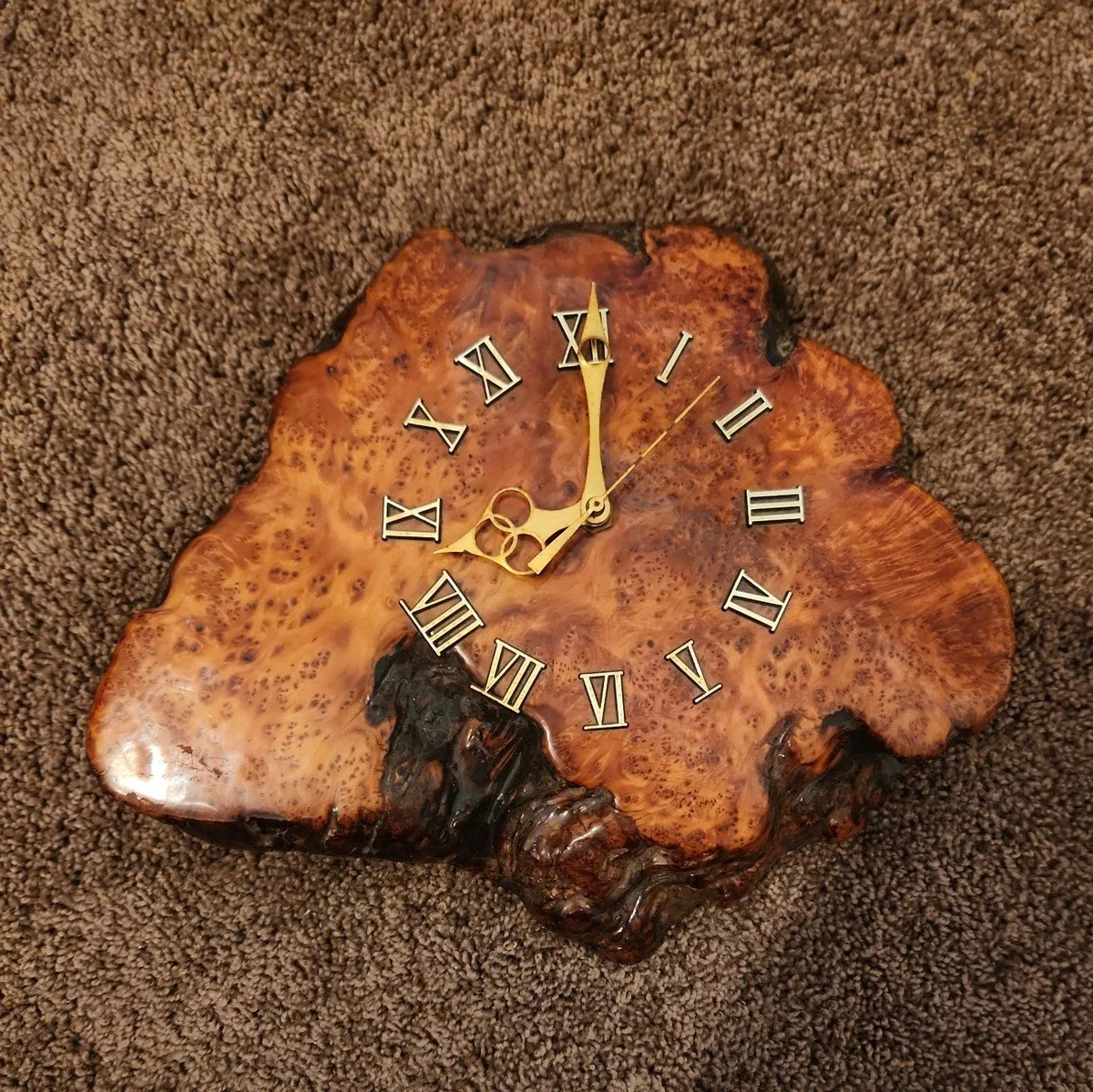
Vintage live edge wood maple burl clock coated with epoxy resin
In the 1960s and 1970s, artists and furniture makers began experimenting with epoxy. Its ability to create durable, glass-like coatings and preserve natural materials opened new doors for creative expression. Makers discovered they could embed objects, swirl pigments, or create thick layers that added depth and dimension to woodwork and decorative pieces. Epoxy became more than a chemical—it became a medium for storytelling, preserving natural beauty while adding clarity, strength, and shine.
As technology advanced, manufacturers began producing safer, low- or no-VOC formulas. Today’s epoxies are far easier to work with, cleaner, and capable of producing crystal-clear results in larger pours without excessive heat or bubbles. Innovations in resin clarity, cure times, and environmental safety have made epoxy accessible to both hobbyists and professional makers, sparking a renaissance in resin furniture and art.
Modern-Day Uses of Epoxy
Epoxy resin has evolved into one of the most versatile materials for makers, artists, and furniture designers. Its clarity, strength, and durability make it perfect for a wide range of applications, from functional furniture to decorative art pieces.
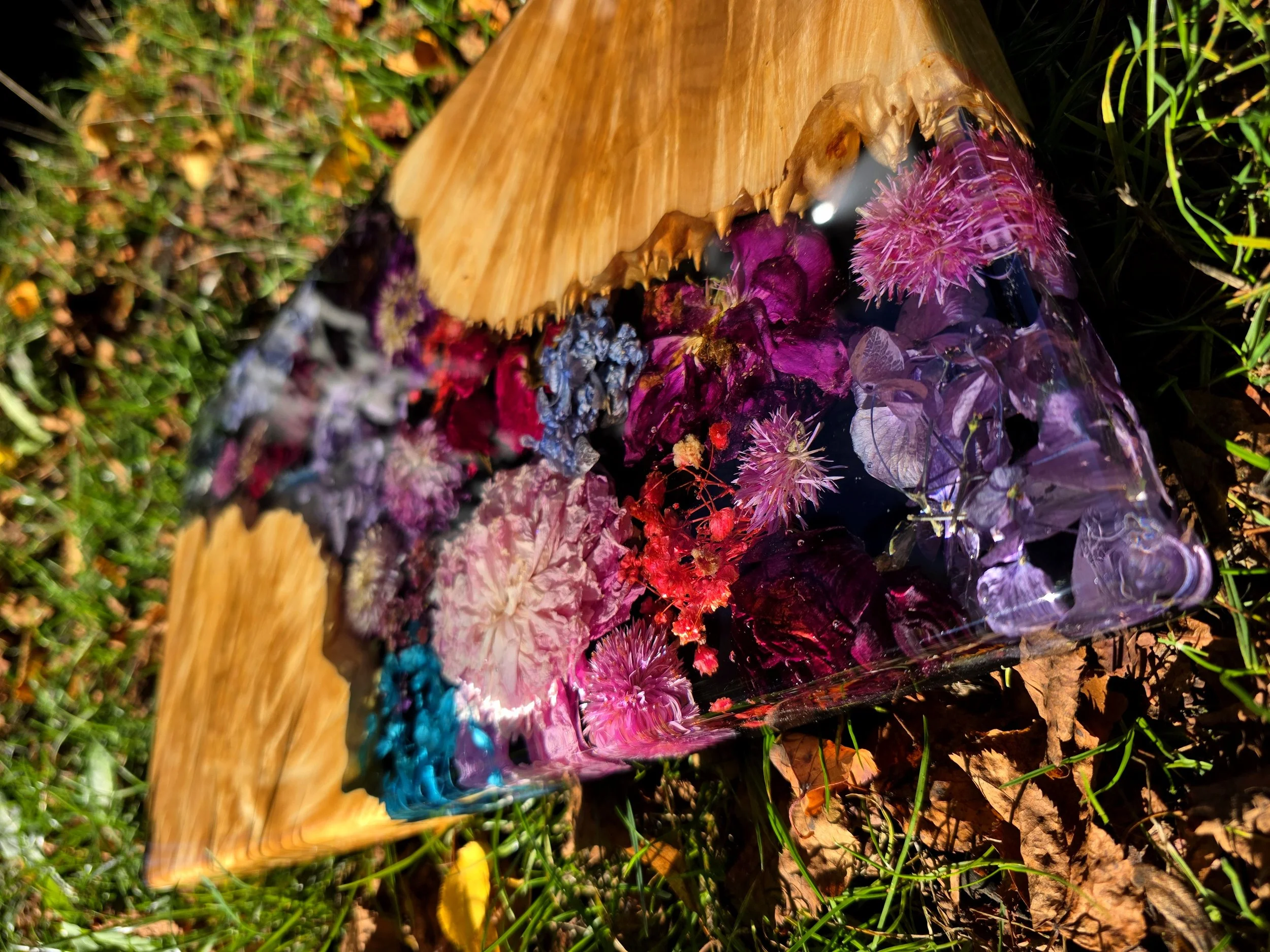
One-of-a-kind epoxy resin charcuterie board with live edge maple burl wood and dried flowers. Made by Haig Designs
In woodworking, epoxy enhances live edge tables, countertops, and bar tops, creating pieces that are both durable and visually stunning. Resin rivers, embedded objects, and layered designs bring wood to life, transforming slabs into interactive art that showcases natural grain, knots, and textures. Makers use epoxy to fill voids, seal cracks, and enhance the natural beauty of wood while achieving a glass-like, flawless finish.
Beyond furniture, epoxy is widely used in home décor, including wall art, trays, serving boards, and charcuterie boards. Makers can embed flowers, shells, coins, or other keepsakes, preserving them in clear resin for a timeless effect. This makes epoxy ideal for creating personalized gifts, custom décor, or heirloom-quality pieces. Its waterproof and scratch-resistant properties make it practical for surfaces that see everyday use, including dining tables, coffee tables, cutting boards, and bar tops.
Epoxy is also a favorite among artists for mixed-media projects. Pigments, metallic powders, dyes, and layering techniques allow creators to achieve vibrant colors, gradients, and patterns that cannot be replicated with other materials. From resin jewelry to sculptures, wall panels, and decorative trays, epoxy provides endless opportunities for experimentation and personalization.
In addition, epoxy plays a vital role in marine and outdoor applications. High-performance marine epoxy protects boats, docks, and outdoor furniture from water, UV damage, and environmental exposure. Low-VOC and eco-friendly formulations allow makers to work safely indoors without compromising air quality or personal safety. This evolution of safer, sustainable resins has made it possible for hobbyists and professionals alike to explore new creative avenues.
For furniture makers and designers, epoxy is more than just a finishing material—it is a tool for artistic expression. Live edge resin tables, resin charcuterie boards, floral resin art, and decorative serving boards showcase the ability to combine function and beauty in a single creation. Epoxy allows for deep pours, intricate casts, and artistic effects that highlight natural wood while adding depth, color, and clarity. Each piece becomes a statement of craftsmanship, creativity, and attention to detail.
Haig Designs: Mastering Wood and Epoxy
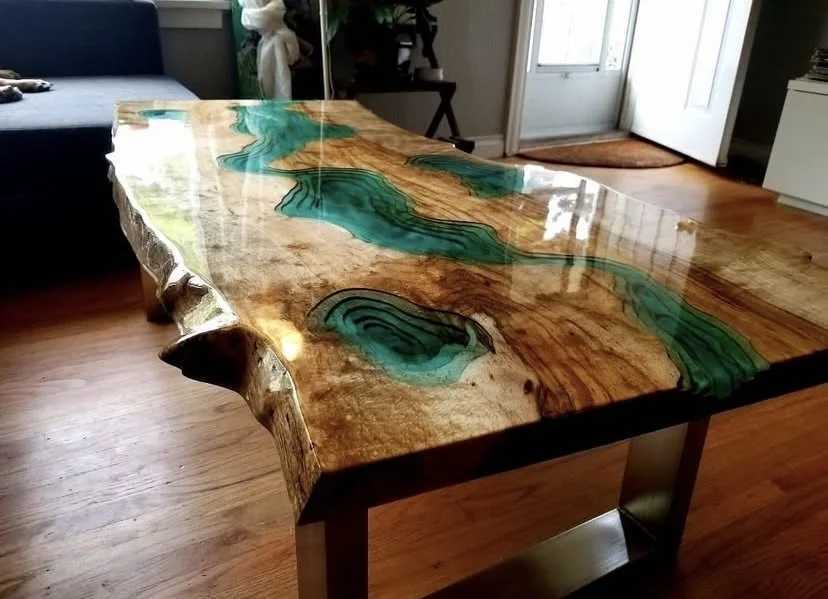
A Haig Design's classic. Live edge coffee table with a channeled turquoise epoxy river. Clear coated with epoxy resin for a mirror like finish
At Haig Designs, epoxy is the heart of our craft. We blend live edge wood with high-quality epoxy resin to create bespoke pieces that are as functional as they are visually striking. Our signature epoxy tables feature realistic three-dimensional ocean waves, where the resin flows around the wood grain to create a sense of movement and depth. These tables are not just furniture—they are immersive works of art.
We also use epoxy to preserve dried flowers, crafting timeless floral arrangements encased in clear resin. These pieces serve as decorative art, heirlooms, or gifts that capture beauty for years to come. Our product line includes charcuterie boards, serving trays, resin river tables, and custom live edge tables—all designed with precision, creativity, and durability in mind.
Every project at Haig Designs begins with carefully selected wood slabs and continues through meticulous epoxy pouring, sanding, and finishing. Our process ensures minimal bubbles, crystal-clear pours, and flawless finishes. Each piece combines the natural beauty of wood with the clarity, depth, and vibrancy of epoxy resin, resulting in one-of-a-kind creations that enhance any home or space.
Whether you’re interested in custom epoxy tables, resin charcuterie boards, floral resin art, or decorative resin pieces, Haig Designs offers a wide range of options to suit your vision. Every creation is handcrafted with care, designed to last, and built to transform wood and epoxy into functional art that brings warmth, personality, and beauty into your space.
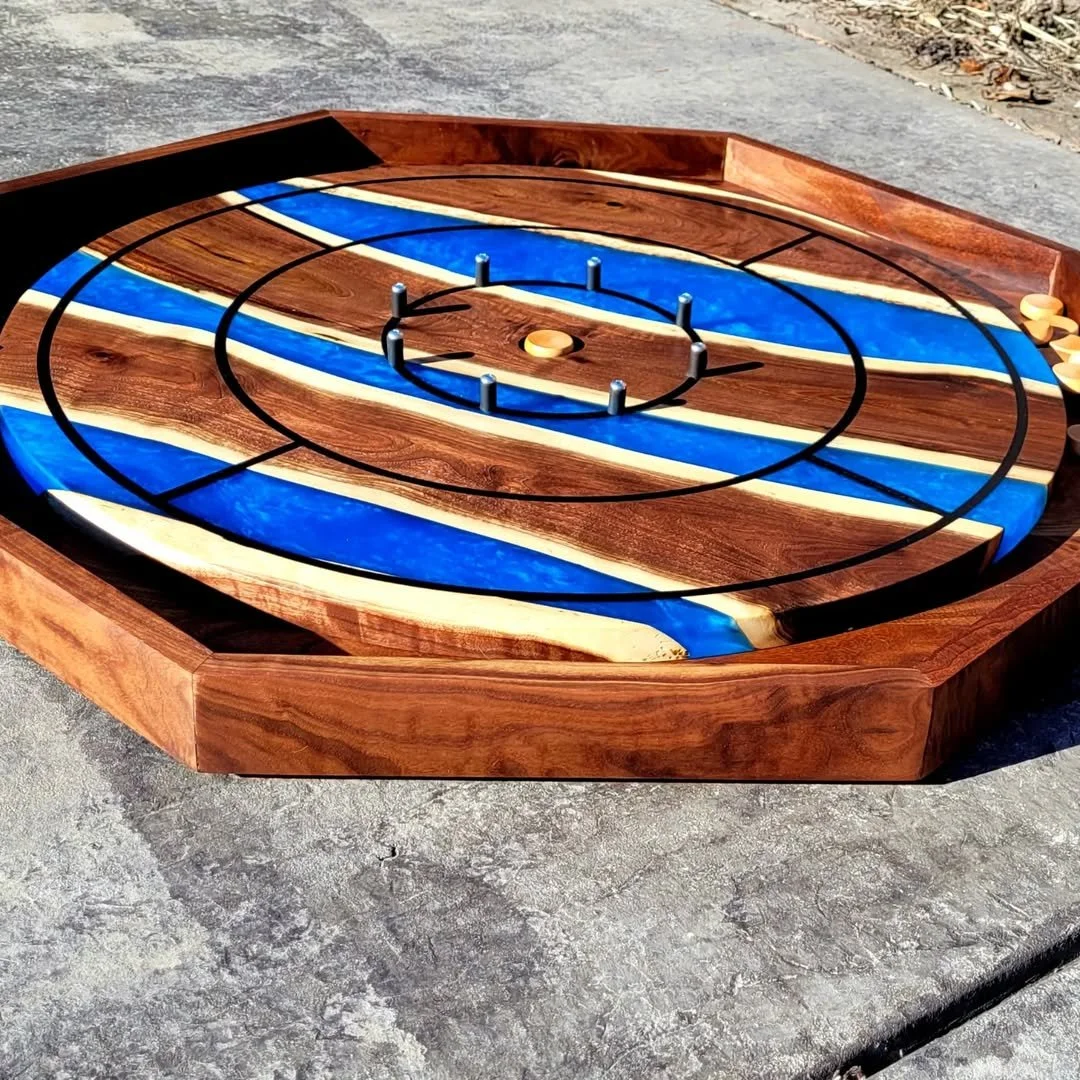
Haig Design’s interpretation of a crokinole board. Made from a combination of dimensional black walnut, live edge black walnut, and bright blue epoxy resin.
If you want to explore the possibilities of epoxy and see how live edge wood and resin can come together to create stunning pieces, check out our full collection of tables, boards, and decorative resin art here. Each piece reflects our commitment to craftsmanship, creativity, and the limitless potential of epoxy resin.
